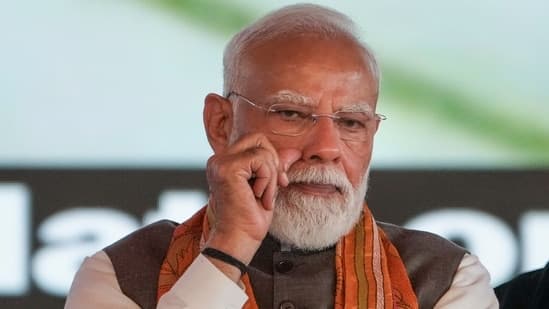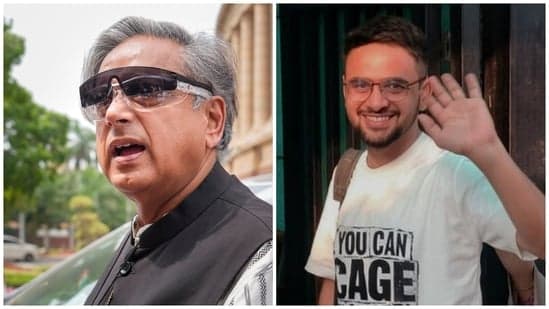
Congress MP Shashi Tharoor has questioned why former JNU student leader Umar Khalid continues to remain behind bars without a trial. The Parliamentarian on Monday called Khalid’s six years-long confinement, in connection with the 2020 Delhi riots, a “travesty of justice and a blot on our democracy".

His reaction came as Umar Khalid's interview with The Guardian, in which the PhD scholar questioned the silence of Opposition parties, was published. Sharing the interview-cum-analysis, Tharoor wrote on X, “This moving article on [Umar Khalid] in prison prompts a simple question: if he really has incited terrorism, why not prove it in a court of law?”
“Why deny him the basic right of any Indian citizen accused of a crime, the right to a fair trial? Languishing six years behind bars, without a chance to defend himself legally, is a travesty of justice and a blot on our democracy. I think the people of India have a right to know why,” Tharoor added.
Umar Khalid on Opposition's silence
Khalid's bail pleas have repeatedly been delayed, adjourned or heard by judges who later recused themselves. Each application has ultimately been rejected. The BJP has denied any role in the legal proceedings, while publicly welcoming court decisions denying him bail.
In his first interview since his 2020 arrest, Khalid criticised the opposition's failure to speak up for political prisoners jailed since the BJP came to power.
He told The Guardian, “Six years down the line, I must say that I am really disappointed and even feel isolated. This silence – of opposition parties, of civil society groups, of celebrity activists who have made a career out of piggy-backing on people's movements – emboldens this regime to go after further dissidents.”
The case against Umar Khalid
Before he became prisoner number 626714 in Delhi’s infamous Tihar Jail, Khalid was a prominent face of peaceful resistance.
Highly educated, with a PhD in history from Jawaharlal Nehru University (JNU), he spent years speaking out against the marginalisation and ghettoisation of India's over 20 crore Muslims.
In late 2019, the PM Narendra Modi led-BJP government passed the Citizenship (Amendment) Act, which was seen as discriminatory towards Muslims. Massive, largely peaceful protests swept the country. Khalid was a key figure. He once famously told a crowd, “We won’t respond to violence with violence. We won’t respond to hate with hate. If they spread hate, we will respond to it with love.”
In February 2020, deadly riots broke out in northeast Delhi and left over 50 people dead. Khalid was arrested seven months later on the charge of "masterminding" the riots to engineer a violent regime change.
He was held under the Unlawful Activities (Prevention) Act (UAPA). Khalid has consistently denied the allegations against him and said they were politically motivated. He remains jailed with no trial date set.
Umar Khalid on prison and 'terrorist' label
On the psychological toll of nearly six years in prison, Khalid said prolonged incarceration affected both his mental health and sense of self. "When you are reduced to just an image, either negative or positive, it becomes difficult to maintain not just your humanity but even your sanity at times," he said.
He also claimed that the years behind bars had not altered his political views. He told The Guardian that "the process of India becoming a post-truth society is near complete" and describing the "normalisation and glorification of hate speech and genocidal language."
"You even hear murmurs about yourself from fellow prisoners you shared meals with, calling you a terrorist behind your back. This propaganda dehumanises me in people's eyes. Humanity is a privilege that is not granted to people like me," he said.
What Umar Khalid's parents said
His father, Syed Qasim Rasool Ilyas, told The New York Times in 2024, "As they say, the process is the punishment. And it is very easy to frame someone with a Muslim name these days."
His mother, Sabiha Khanam, recalled one of the few moments she was able to meet her son in court. "I hugged him hard and prayed for his release," she said, as per The NYT.
Earlier this month, Khalid was granted a three-day interim bail by the Delhi High Court from June 1-3 to care for his mother, who underwent surgery.
The court granted him temporary relief after a trial court rejected his request for 15 days' bail to attend his maternal uncle's Chehlum (memorial) ceremony and help his mother during and after her operation.