That was unexpected
THE RUNDOWN
- Experts are forecasting a G2 geomagnetic storm hitting Earth on Friday, July 3, 2026, around 5:50pm AEST.
- While peak aurora activity will be concentrated in northern regions, the lights will pass over Australia and New Zealand.
- This could result in aurora displays in Victoria, Tasmania and New Zealand, with some parts of New South Wales, ACT, South Australia and Western Australia exposed.
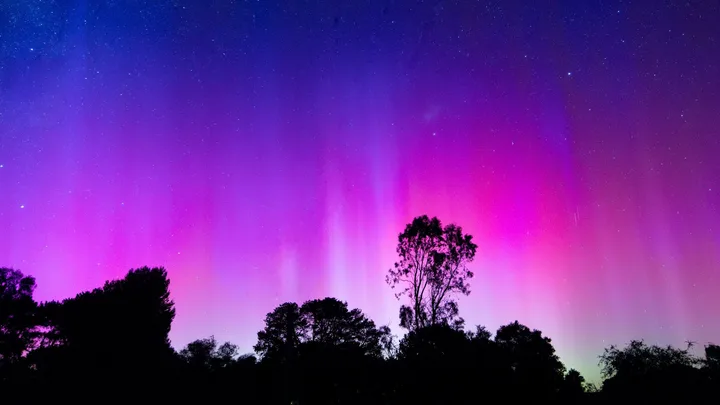
Cancel your Friday night plans and charge your smartphone. A surprise aurora australis could paint the Australian night sky in vivid shades of electric pink and neon green tonight, Friday, July 3, 2026, with peak viewing times expected to trigger across southern regions between 5:50pm and 6:20pm local time.
A celestial event of this scale is the ultimate winter spectacle — a transient, hyper-visual spectacle that turns a dark, crisp night into an open-air gallery. Tonight’s potential display arrives courtesy of a temperamental “machine-gun sun” that fired off a massive X1.1-class solar flare followed by a staggering barrage of ten M-class flares over a 24-hour window. This intense solar activity has sent a sequence of coronal mass ejections (CMEs) — colossal clouds of solar plasma — hurling directly toward Earth’s magnetic shield.
The resulting G2 (moderate) geomagnetic storm means the ethereal southern lights are officially heading our way. If the winter skies remain clear, we could be in for a treat.
While our northern hemisphere counterparts regularly boast about the Aurora Borealis, catching the southern equivalent is a far more exclusive affair. As Dr. Laura Driessen, an astrophysicist at the University of Sydney, explains, it all comes down to geography.
“There’s a lot more land mass in the north of the northern hemisphere than there is in the south of the southern hemisphere. Melbourne is at the same latitude as Athens! That’s why we see a lot more photos of the northern lights. The ring of latitudes in the southern hemisphere where auroras occur is mostly over the ocean between us and Antarctica.”
When those cosmic solar particles do finally collide with atoms in our upper atmosphere, they release energy in a breathtaking, glowing dance. Because of our unique global position, seeing it from Australian soil requires a perfect cocktail of solar power, dark horizons, and clear skies.
In This Article:
Where To See The Aurora Australis
When To See The Aurora Australis In Your Australian City
Where To See The July Aurora Australis
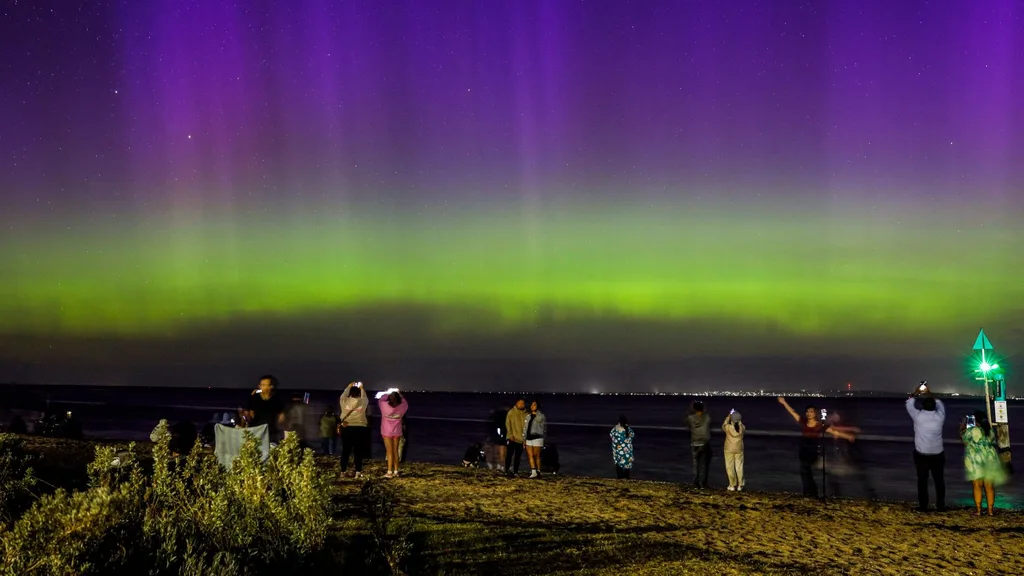
Tasmania, Victoria and New Zealand have a decent chance of seeing the aurora, while other states like New South Wales, the ACT, South Australia and the southern regions of Western Australia are in with a chance of seeing it. Auroras’ inherent unpredictability can be a good and bad thing. In January, a mild storm intensified, resulting in a sudden and stunning burst of aurora activity across Australia, so no matter the forecast, it pays to be prepared. To maximise your chances, you’ll want to escape the glittering light pollution of the city centres, find a dark elevated vantage point, and look directly toward the southern horizon roughly an hour after sunset.
When To See The Aurora Australis In Your Australian City
You can check websites like the NOAA and Aurora Map for live predictions. Based on current data, these are peak times for aurora viewings:
What Is The Difference Between Aurora Australis And Aurora Borealis?
The short answer is geography. They are the exact same cosmic phenomenon, just happening at opposite poles of our planet.
Here is the quick breakdown of how they stack up against each other:
- Aurora Australis (The Southern Lights): Occurs around the South Pole. The word Australis translates directly from Latin as “southern” (which is also where the name Australia comes from).
- Aurora Borealis (The Northern Lights): Occurs around the North Pole. Borealis comes from the ancient Greek god of the north wind, Boreas.
How Do Auroras Work?
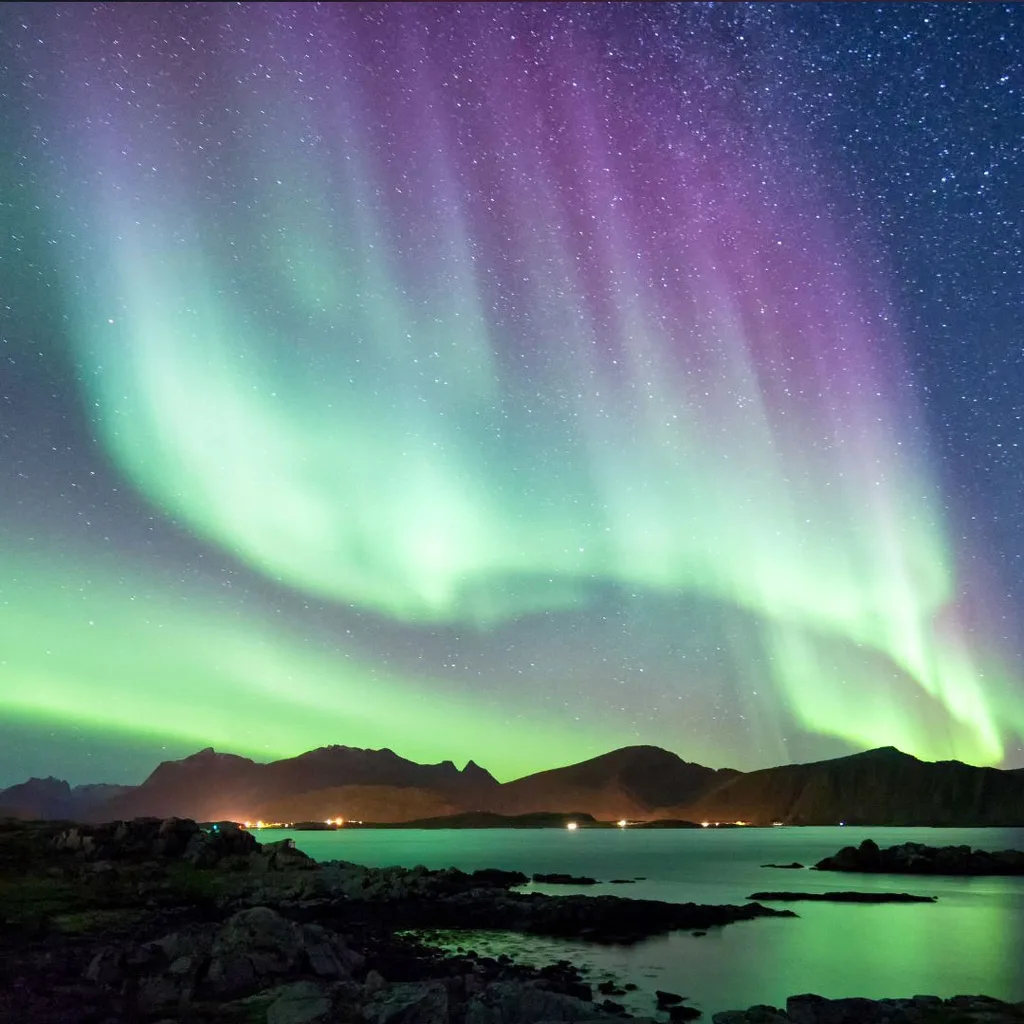
Both lights are triggered by the exact same cosmic catalyst. When the sun fires off a burst of solar wind or plasma (a coronal mass ejection), these highly charged particles hurtle through space and smash into Earth’s magnetic shield. According to NASA’s Jet Propulsion Laboratory, these brilliant ribbons of light are actually dynamic magnetic storms. When the fast-moving solar particles seep through Earth’s magnetic shield, they slam into our upper atmosphere, colliding with oxygen and nitrogen particles and causing them to glow like a neon sign.
Our magnetic field naturally channels these particles toward the two weakest points — the North and South magnetic poles. When the solar particles collide with the gases in our atmosphere, they light up like a giant neon sign.
How To See The Aurora Australis
One of the most fascinating quirks of chasing the aurora australis is that our eyes aren’t always evolved enough to register the faint, diffuse light in its initial stages. To the naked eye, the cosmic display might just look like a strange, pale silver mist shifting on the horizon. As Dr Dreissen explains: “Our eyes aren’t very good at picking up faint, diffuse light. It’s a good idea to use your phone camera to spot the aurora at first. Set your camera exposure to as high as possible and hold your phone steady.”
Smartphone camera sensors are far more sensitive to these light wavelengths than human retinas, meaning your screen can reveal vibrant magentas and emerald greens that you can’t quite see unassisted.
- Switch to Night Mode:
Open your iPhone or Android camera app. Ensure your flash is completely turned off and let the camera automatically engage “Night Mode” or switch over to manual adjustments.
2. Maximise the Exposure Time:
Manually slide your exposure or shutter speed setting as high as it will go—aim for a window between 3 to 10 seconds. This allows the lens to drink in as much faint atmospheric light as possible.
3. Steady Your Frame:
An exposure shot requires absolute stillness. If you don’t have a tripod on hand, brace your phone against a fence post, a car roof, or hold your breath and rest your elbows firmly against your torso to prevent micro-shake from blurring the cosmic light trails.
Expert Warning: Remember to keep your expectations in check! Auroras are fickle and unpredictable. They can surprise us with spectacular shows or be thwarted by unexpected clouds and sudden shifts in direction. “An alert like this, unfortunately, doesn’t guarantee that it’ll be visible,” says Dr Dreissen. “Keep an eye on the BOM and on free aurora alert apps after sunset to work out your chances of catching it.”
Ruby Feneley Senior Writer, Fashion + Beauty
Ruby is a journalist and editor with a career spanning beauty, fashion, culture and lifestyle. After completing a Bachelor of Arts (English Literature/Gender and Culture Studies) at the University of Sydney, she started her Australian media career as a media and marketing reporter for Mumbrella. An ex-makeup artist, she quickly transitioned to beauty journalism and has held multiple in-house positions as a Beauty Editor. Ruby’s writing can be found across print and digital titles, including Dazed, GRAZIA, The Sydney Morning Herald, The Age, The Australian Financial Review, Refinery29 and marie claire. Now, she loves covering internet subcultures, TikTok trends and astrology (she is a Leo) as much as she loves scouring shopping aisles for the best non-sticky lip gloss and tracking down the perfect pencil for a faux freckle.
Sign up for our newsletter
Sign up for the latest news from ELLE including offers and discounts we choose to share with you
By joining, you agree to our Privacy Policy & Terms of Use