Turkey backs Hamas, deepens its foothold in Syria, expands its air and naval ambitions and is drawing closer to Egypt, while fiery rhetoric in Jerusalem and Ankara fuels fears of escalation. But despite the strategic challenge, analysts say Erdogan’s Turkey is not Iran
Turkey is increasingly becoming Israel’s newest demon. It grants patronage to Hamas, entrenches itself in Syria, builds up its air power, expands at sea, moves closer to Egypt and meddles in nearly every regional arena. Fiery rhetoric in both Jerusalem and Ankara is also helping inflame tensions. Still, Turkey is not Iran.
In recent months, particularly since the end of the war with Iran, a broad consensus has begun to take hold in Israel, voiced by both Prime Minister Benjamin Netanyahu and former prime minister Naftali Bennett, that “Turkey is the new Iran.” According to this view, Turkish President Recep Tayyip Erdogan seeks Israel’s destruction and is forming a Sunni regional axis to rival the Shiite one, with the shared goal of surrounding Israel with a ring of fire.
Gallery
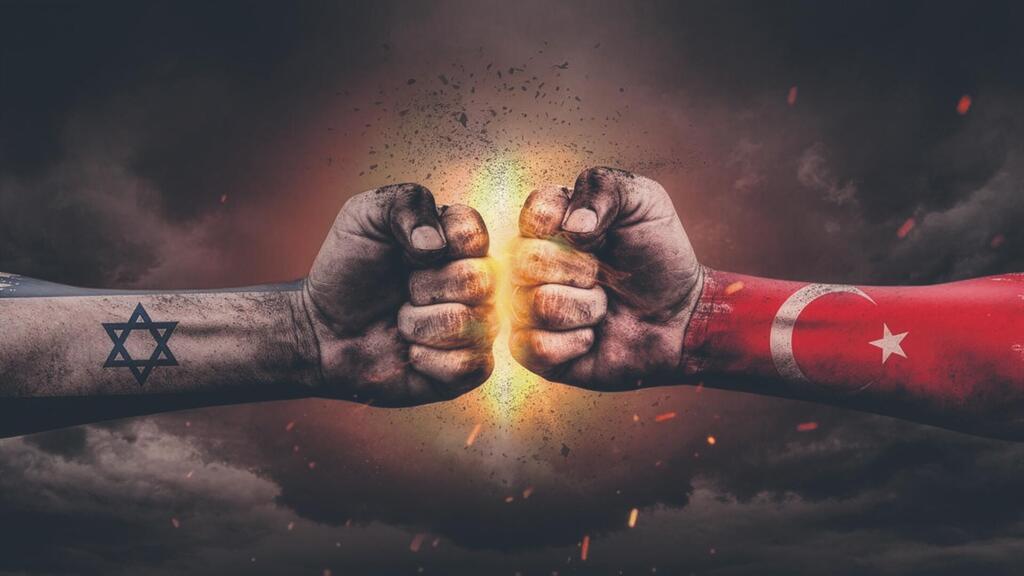
Turkey is becoming Israel’s new demon, but it is not Iran
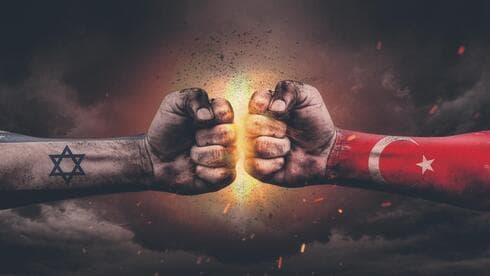
(Illustration from Al-Sabil, the Muslim Brotherhood newspaper in Jordan)
This is, in many ways, a natural reaction by a country still living in the post-trauma of October 7, one that has never undergone a piercing national inquiry, has come to accept war as a permanent condition and is constantly searching for enemies while preparing for confrontation with them.
But another key lesson from October 7 is that the public must ask questions about sweeping assessments presented to it as scientific fact, and sometimes challenge them.
In the Turkish context, the question is how far Ankara, which still maintains diplomatic ties with Israel despite the severe crisis between the countries, is truly driven by a plan to destroy Israel and seeking confrontation. If that is indeed the conclusion, Israel must also ask what military steps are required, whether it should show initiative toward “emerging threats,” as Defense Minister Israel Katz suggested this week, and how it should build force against a major U.S. ally with the second-largest army in NATO.
If one looks only at the rhetoric, the two countries do appear to be on the brink of war.
In recent weeks, Erdogan has added to his usual accusations that Israel is committing genocide in Gaza, saying Turkey’s struggle is against Zionism as a whole and is being waged on behalf of the Islamic nation. He has also issued sharp warnings that Israeli strikes in Lebanon and Syria threaten Turkey’s national security.
Turkey’s interior minister went further, declaring that “just as we saw the liberation of Damascus and Aleppo, one day we will also see the liberation of Jerusalem, and these places will once again be ours.” He even expressed hope that he would one day serve as governor of Jerusalem.
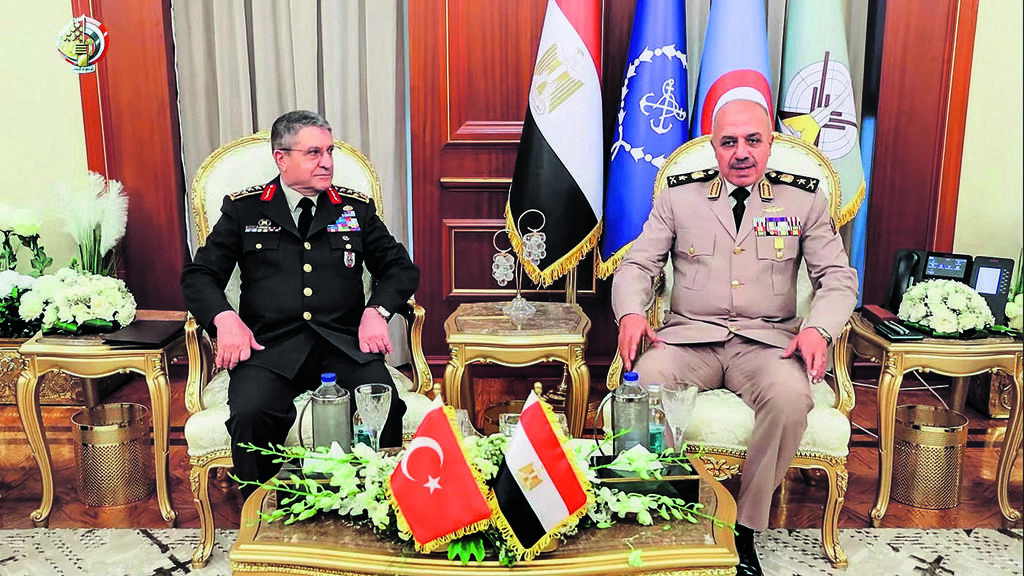
The Turkish chief of staff, left, with his Egyptian counterpart in Cairo this week
(Photo: official website of the Egyptian government)
Netanyahu, for his part, said anyone speaking about Israel’s destruction must be taken seriously, while other ministers competed in their attacks on Ankara. Katz, who two years ago warned that “Erdogan is following the path of Saddam Hussein and threatening to attack Israel,” mocked Turkey by saying that “the Ottoman Empire collapsed and will never return” and that “Erdogan is taking Turkey back to an age of darkness and backwardness.”
Diaspora Affairs Minister Amichai Chikli said the threat from Turkey was greater than the threat from Iran. Culture and Sports Minister Miki Zohar even warned that “if Erdogan dares to test us, his fate will be worse than that of the dying Iranian regime.”
Azerbaijan, an important Israeli ally that receives military support from Israel and is especially valuable because of its proximity to Iran, called the decision “a concerning move that mixes complex historical processes with political issues” and urged Israel to reconsider. Even Armenia responded coolly. Prime Minister Nikol Pashinyan took a swipe at Israel, saying that “for Armenia’s benefit, it is not right to turn the Armenian genocide into a political tool.” Foreign Minister Gideon Sa’ar then clarified that the move stemmed from moral reasons and was not revenge against Erdogan.
Once the rhetoric is stripped away, three central challenges currently emerge from Turkey.
The first and most important is Turkey’s continued entrenchment in Syria, which began immediately after Ahmad al-Sharaa, Ankara’s protégé, took control of the country at the end of 2024. As part of the close ties between the countries and growing Turkish involvement in Syria, efforts are underway to return millions of refugees who fled into Turkey during the Syrian civil war. There is also cooperation against the Kurds in Syria and a visible Turkish military buildup in the country.
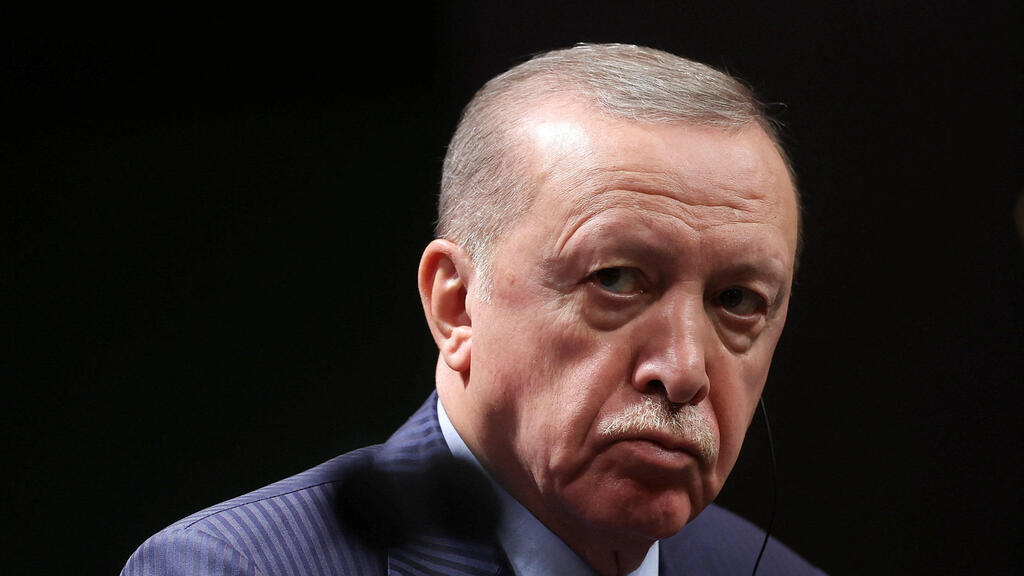
Turkish President Recep Tayyip Erdogan
(Photo: REUTERS/Umit Bektas)
Recently, this was joined by a Turkish effort to prevent U.S. President Donald Trump’s push for al-Sharaa to move into Lebanon to fight Hezbollah, out of fear that such a move would undermine Ankara’s protégé in Damascus.
Katz gave public expression this week to concern over the Turkish threat from Syria.
“Erdogan is becoming more extreme because he is worried about the agreement with Lebanon and Israel’s achievements,” Katz said. “The potential friction point with Turkey is Syria, but let it be clear, the IDF will not leave the security zone there. Israel is monitoring the possibility that Turkey will deepen its presence in Syria, establish bases or try to reduce Israel’s freedom of action in that arena. At the moment, this is not a realistic operational threat, but we are very alert, monitoring and preparing.”
Dr. Gallia Lindenstrauss, an expert on contemporary Turkish foreign policy, offers a more balanced picture.
“Despite its deep influence in Syria, Ankara is showing great caution in its conduct there, mainly out of fear of friction with Israel,” she said. “It continues to maintain a security hotline to prevent an uncontrolled slide into escalation.”
The second challenge lies in Turkey’s effort to advance a deal to purchase F-35 fighter jets from the United States, a move that would threaten Israel’s air superiority in the region. Trump’s vice president, J.D. Vance, has said the administration is examining how to bypass the 2019 directive that removed Turkey from the F-35 development program after it purchased Russian-made S-400 air defense systems.
At the same time, Turkey hopes to complete a deal, now in its final stages, worth $700 million for the purchase of American engines for the advanced KAAN fighter jet produced in Turkey.
“This is a critical component for a project that Erdogan personally sees as highly important for establishing Turkey’s regional power and its image as a strategic asset for NATO,” said Turkish researcher Gonul Tol. “Ankara does produce engines itself, but the pace of production is relatively slow.”
The third challenge is Turkey’s continued patronage of the Hamas headquarters responsible for West Bank operations from its territory. Under this framework, Israel continues to uncover many terrorist networks in the West Bank directed by Hamas headquarters in Istanbul. It is likely that the group’s operatives receive not only protection but also logistical, financial and even military support from Turkish security elements, against the backdrop of deep ideological identification between Erdogan and Hamas.
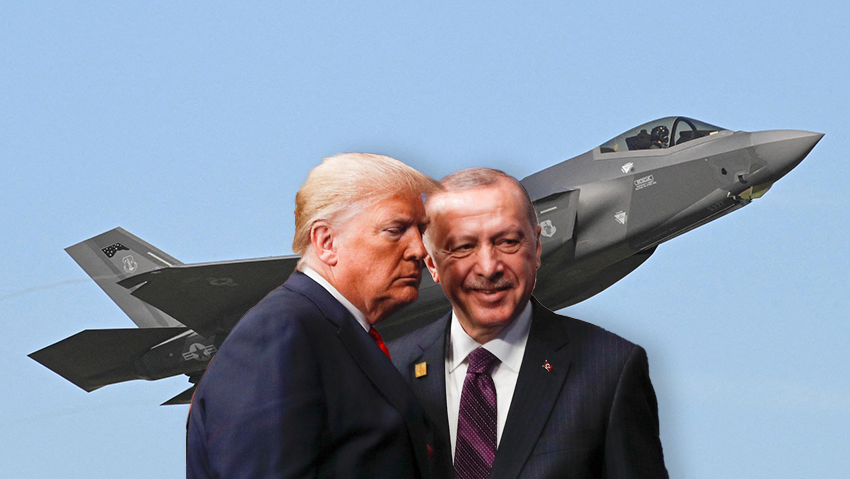
Trump hinted he would make Erdogan ‘very happy’ at the summit, likely by advancing the F-35 deal
(Photo: REUTERS/Jana Rodenbusch)
A fourth challenge is also emerging, focused on civilian infrastructure but carrying strategic implications for Israel.
Ankara is watching with concern the Great Sea Interconnector project promoted by Israel together with Greece and Cyprus. The project aims to connect the three countries to the European electricity grid through a 1,200-kilometer undersea cable, which could provide Israel with an energy backup in the event of damage to its power grid.
Turkey, for its part, is advancing its “Blue Homeland” doctrine, aimed at expanding its maritime space. The move sends a threatening signal toward Greece, through whose maritime area the undersea cable is supposed to pass.
“We must take seriously Erdogan’s June 10 speech, in which he warned Cyprus and Greece not to cooperate with Israel on a move he said would undermine Turkey’s rights, and warned that Turkey would respond harshly if challenged,” said Dr. Hay Eytan Cohen Yanarocak of Tel Aviv University’s Dayan Center.
Another challenge lies in the commercial, transportation and energy corridor from Saudi Arabia to Turkey through Syria, which has gained momentum against the backdrop of the crisis in the Strait of Hormuz. That route is expected to compete with Israel’s vision of establishing a horizontal corridor from Israel to the Gulf states and India.
In the background, Turkey is emerging as one of the major winners from the conflicts that have unfolded across the region since October 7. As its rivals clash, Ankara is expanding its influence in multiple arenas: Libya, Somalia, where Turkey maintains its largest military base outside its borders, and Iraq, as well as Jerusalem and the Gaza Strip, where it cannot deploy forces but supports civilian projects.
Ankara is also part of an effort to establish a Muslim quartet together with Pakistan, an ascending regional power, Saudi Arabia and Egypt. Relations with Egypt have long been tense because of Erdogan’s identification with the Muslim Brotherhood, a sworn enemy of the government in Cairo, but they have improved recently.
That rapprochement has been reflected in the visit of the Turkish chief of staff to Egypt, a joint air drill between the two countries and Ankara’s involvement in mediation efforts with Hamas taking place in Cairo in an attempt to promote an arrangement in Gaza.
The fear of the upheavals created by Israel’s moves in the region is becoming a central axis of Egyptian-Turkish cooperation, hinting at a new regional architecture that is very different from the “new Middle East” Israel once hoped for.
Asked how far Erdogan will go in his confrontation with Israel, Cohen Yanarocak said: “Erdogan is engaged in an ongoing delegitimization campaign against Israel that is expressed not only in harsh speeches, but also in active involvement in the legal proceedings initiated by South Africa at the International Court of Justice in The Hague, in economic sanctions and in arrest warrants against senior Israeli officials. Still, it seems Ankara does not want to escalate the situation to the point of severing relations, which would block its access to the Palestinian arena, and especially to the Temple Mount.”
Lindenstrauss reinforces that assessment.
“Since October 7, Erdogan has hardened his line against Israel to the point of using expressions that challenge the legitimacy of its existence,” she said. “At the same time, he is careful not to break the rules completely and maintains a dual approach. Just this week, for example, he argued that the two-state vision is the solution that would contribute to stabilizing the region.”
Turkish researcher Elkim Buka-Okyar added that Turkey’s conduct toward Israel is shaped by its understanding of Israel’s close ties with Washington, implying that Ankara must take that constraint into account.
Trump, for his part, appears uncomfortable with the rising tension between two of his allies and, in his usual fashion, is sending opaque messages. He recently claimed that during Operation Lion’s Roar, he prevented Erdogan from joining the campaign, “maybe on Iran’s side.” At the same time, he said the Turkish president is a great leader whom he likes, and that as long as he is in the White House, there will be no confrontation between Jerusalem and Ankara.
“The warm relationship today between Washington and Ankara is a real challenge for Israel, and it appears to have even blocked moves planned during Operation Lion’s Roar against Iran, chiefly encouraging Kurdish militias to act against the regime in Tehran, a move Erdogan strongly opposed and Trump alluded to openly,” Prof. Udi Sommer said this week.
All eyes are now on the 37th NATO summit of heads of state, scheduled to take place next week in Ankara with Trump in attendance. Many strategic issues are expected to be discussed, and there may also be an American attempt to calm the tension with Israel.
Trump has already stirred curiosity by publicly hinting that he is about to make Erdogan “very happy” during the gathering, likely a reference to progress on the F-35 deal. In Ankara, the meeting is seen as highly important, with hopes that it will bring news regarding the military procurement deals Turkey is seeking to advance.
Turkey under Erdogan is undoubtedly a strategic challenge for Israel. It shows hostility toward Israel, but it is not an enemy acting under a plan for Israel’s destruction, as Iran, Hezbollah and Hamas do. Despite the sweeping declarations heard in Israel, confrontation with Ankara is not inevitable.
It is worth recalling the suspicious messages echoed in Israel about a year ago regarding Egypt, claiming that Cairo was preparing attacks against Israel.
As Israel faces complex challenges in Iran, Lebanon and Gaza, a crisis in relations with the United States, frozen ties with the Arab world and an international image at an unprecedented low, one conclusion grows stronger: this is not the time for more friction, let alone a broad confrontation with a regional power like Turkey.
It would be better to focus on this challenge only when Israel can determine with certainty that Iran’s nuclear threat has been neutralized, Hezbollah has been removed from southern Lebanon and Hamas has been prevented from regaining the power it had before October 7.
In many of the crises that have unfolded since the massacre, Trump has forced Israel to adopt a diplomatic track, illustrating that no conflict can be resolved by military means alone. In the case of Turkey, it may be wise to advance that track, preferably without American coercion, before a military confrontation develops and, in fact, in order to prevent one.
Dr. Michael Milshtein is a senior researcher at Tel Aviv University’s Dayan Center and the author of “Generation of the Flood”