Quick Brief
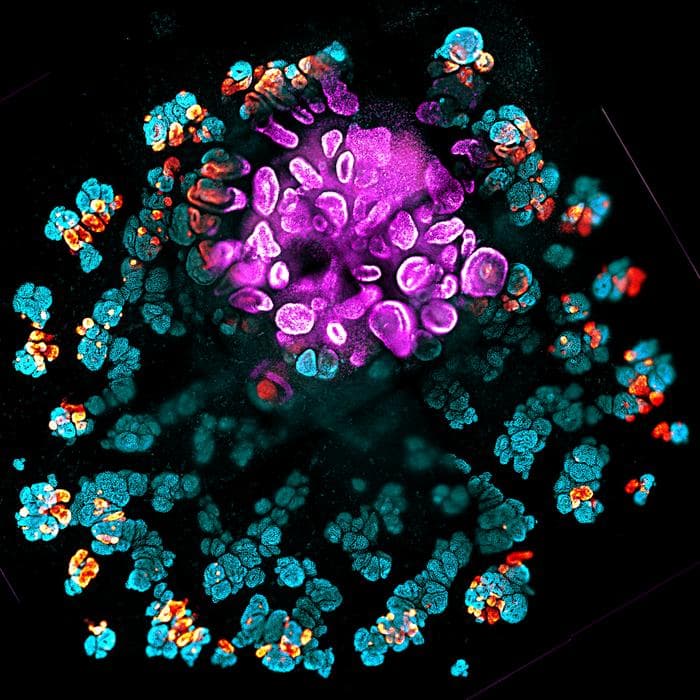
Researchers at the University of Southern California have made a breakthrough in creating more reliable kidney organoid structures. These structures are grown from human pluripotent stem cells and are being used as models for studying disease and evaluating potential therapies. The breakthrough involves the use of synthetic organizers that help control the formation of the kidney organoids. This development has the potential to improve the accuracy of medical research and lead to more effective treatments.
The researchers used a combination of biological and engineering techniques to achieve this breakthrough. By mapping the developmental process of kidney organoids, they were able to identify specific synthetic organizers that can be used to control their formation. This allows for the creation of more consistent and reliable kidney organoids that can be used in medical research.
The use of synthetic organizers in this process is a key innovation. Traditionally, kidney organoids have been difficult to replicate, making it challenging to use them as reliable models for studying disease and evaluating potential therapies. The synthetic organizers provide a way to control the formation of the kidney organoids, making them more faithful and reproducible.
Why This Matters
This breakthrough has significant implications for the field of medical research. Kidney organoids are being used to study a range of diseases, including kidney failure and kidney cancer. By creating more reliable kidney organoids, researchers can gain a better understanding of these diseases and develop more effective treatments. This could lead to improved patient outcomes and a better quality of life for those affected by these conditions.
The use of synthetic organizers also has potential applications in the field of regenerative medicine. Regenerative medicine involves the use of stem cells and other technologies to repair or replace damaged tissues and organs. The creation of more reliable kidney organoids could pave the way for the development of new regenerative therapies.
Background
Kidney organoids are three-dimensional structures that are grown from human pluripotent stem cells. They are being used as models for studying disease and evaluating potential therapies. However, the traditional methods used to create kidney organoids have been difficult to replicate, making it challenging to use them as reliable models.
Human pluripotent stem cells have the ability to differentiate into any cell type in the body, making them ideal for use in medical research. However, the process of differentiating these cells into specific cell types is complex and difficult to control. The use of synthetic organizers provides a way to control this process, making it possible to create more consistent and reliable kidney organoids.
Key Details
- Researchers at the University of Southern California have created more reliable kidney organoid structures using synthetic organizers.
- The synthetic organizers are used to control the formation of the kidney organoids.
- The kidney organoids are grown from human pluripotent stem cells.
- The use of synthetic organizers allows for the creation of more consistent and reliable kidney organoids.
- The breakthrough has significant implications for the field of medical research, particularly in the study of kidney disease.
- The use of synthetic organizers also has potential applications in the field of regenerative medicine.
Possible Impact
The creation of more reliable kidney organoids has the potential to improve the accuracy of medical research and lead to more effective treatments. This could lead to improved patient outcomes and a better quality of life for those affected by kidney disease. The use of synthetic organizers also has potential applications in the field of regenerative medicine, where they could be used to develop new therapies for repairing or replacing damaged tissues and organs.
The impact of this breakthrough will be felt across a range of industries, including biotechnology and pharmaceuticals. Companies involved in the development of new therapies and treatments for kidney disease may benefit from the use of more reliable kidney organoids. Additionally, the use of synthetic organizers could lead to the development of new regenerative therapies, which could have a significant impact on the field of medicine.
What To Watch Next
As this breakthrough continues to develop, researchers will be working to refine the use of synthetic organizers in the creation of kidney organoids. This may involve further experimentation and testing to determine the optimal conditions for using these organizers. Additionally, researchers will be working to apply this technology to other areas of medical research, such as the study of cancer and neurological diseases.
The field of regenerative medicine is also likely to see significant advancements as a result of this breakthrough. Researchers will be working to develop new therapies that use synthetic organizers to repair or replace damaged tissues and organs. This could lead to significant improvements in patient outcomes and a better quality of life for those affected by a range of conditions.
Source and Transparency
Source: Genetic Engineering and Biotechnology News This BRIEFXIFY brief is AI-assisted and based on publicly available news source information. It is written for quick understanding and does not replace the original report. Read the original source for full context.