By Oneli Nonis
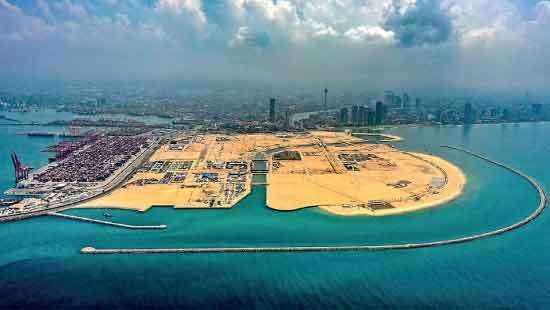
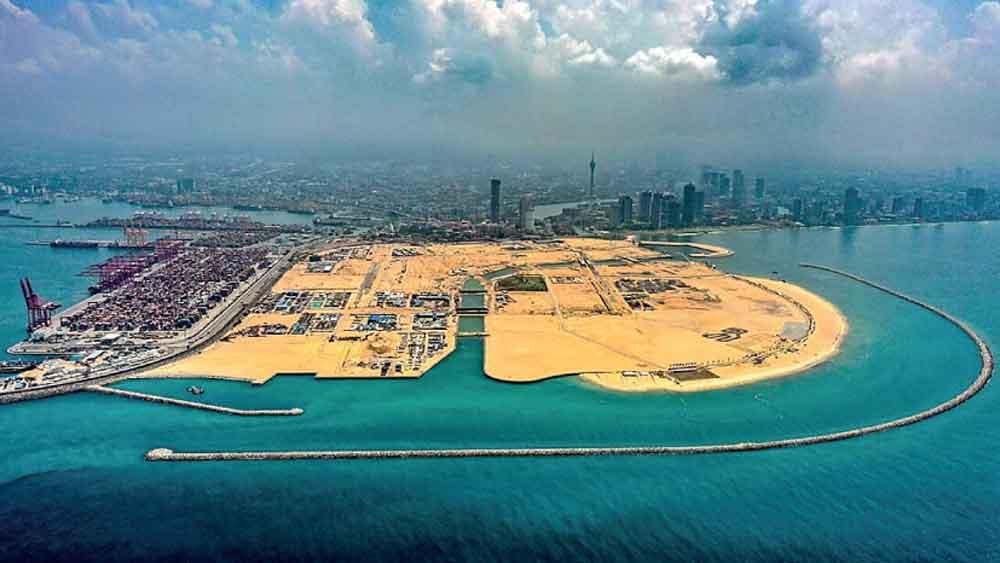
China Harbour Engineering Company’s Port City Colombo confirmed a US $ 300 million foreign direct investment (FDI) commitment in January 2026, according to a Global Finance Magazine analysis, as Sri Lanka works to convert the Chinese-financed special economic zone into a genuine regional financial hub.
The renewed momentum comes alongside an intensified global investment promotion campaign.
Foreign Minister Vijitha Herath, during a Sri Lanka-Victoria industry roundtable hosted by Global Victoria recently, invited the investors in Melbourne, Australia, to explore the opportunities in Port City Colombo. He described the project as a gateway for trade and infrastructure expansion. Engaging the Investment, Trade and Industry Ministry, the Sri Lankan diplomatic missions have also promoted the project in Malaysia.
Developed on 269 hectares of reclaimed land, with an initial US $ 1.4 billion Chinese investment, Port City Colombo remains central to Sri Lanka’s economic strategy this year.
The government has amended the Strategic Development Projects Act to offer tax holidays of up to 40 years within the zone and introduced an Investment Protection Bill alongside a single-window approval mechanism, aimed at addressing the investor concerns over regulatory uncertainty.
Analysts note that improving the macroeconomic indicators is supporting the country’s investment pitch.
The Central Bank of Sri Lanka has upgraded its 2026 growth forecast to 4-5 percent, above the International Monetary Fund’s projection of 3.1-3.3 percent.
Foreign reserves have also risen to around US $ 7 billion, marking a post-crisis high.
However, economists caution that execution remains the key challenge.
Advocata Institute CEO Dhananath Fernando has argued that Sri Lanka’s ability to attract sustained investment depends on strengthening institutional credibility, noting that weak public-sector remuneration and politicised appointments continue to hinder recruitment of skilled officials for major investment agencies. Looking ahead, a new Public-Private Partnership Act expected in early 2026 is intended to further open infrastructure, energy and telecommunications sectors to private capital, as Colombo seeks to consolidate recovery following its 2022 sovereign default.