Environmental Pollution Cleanup Breakthrough
A team of researchers at Flinders University has discovered a potential game-changer in the fight against environmental pollution. Led by the university, the study found that "friendly" viruses, known as lysogenic phages, can be used to supercharge bacteria's ability to remove pollutants from soil, water, and mine waste. The breakthrough could revolutionize the way we clean up polluted environments.
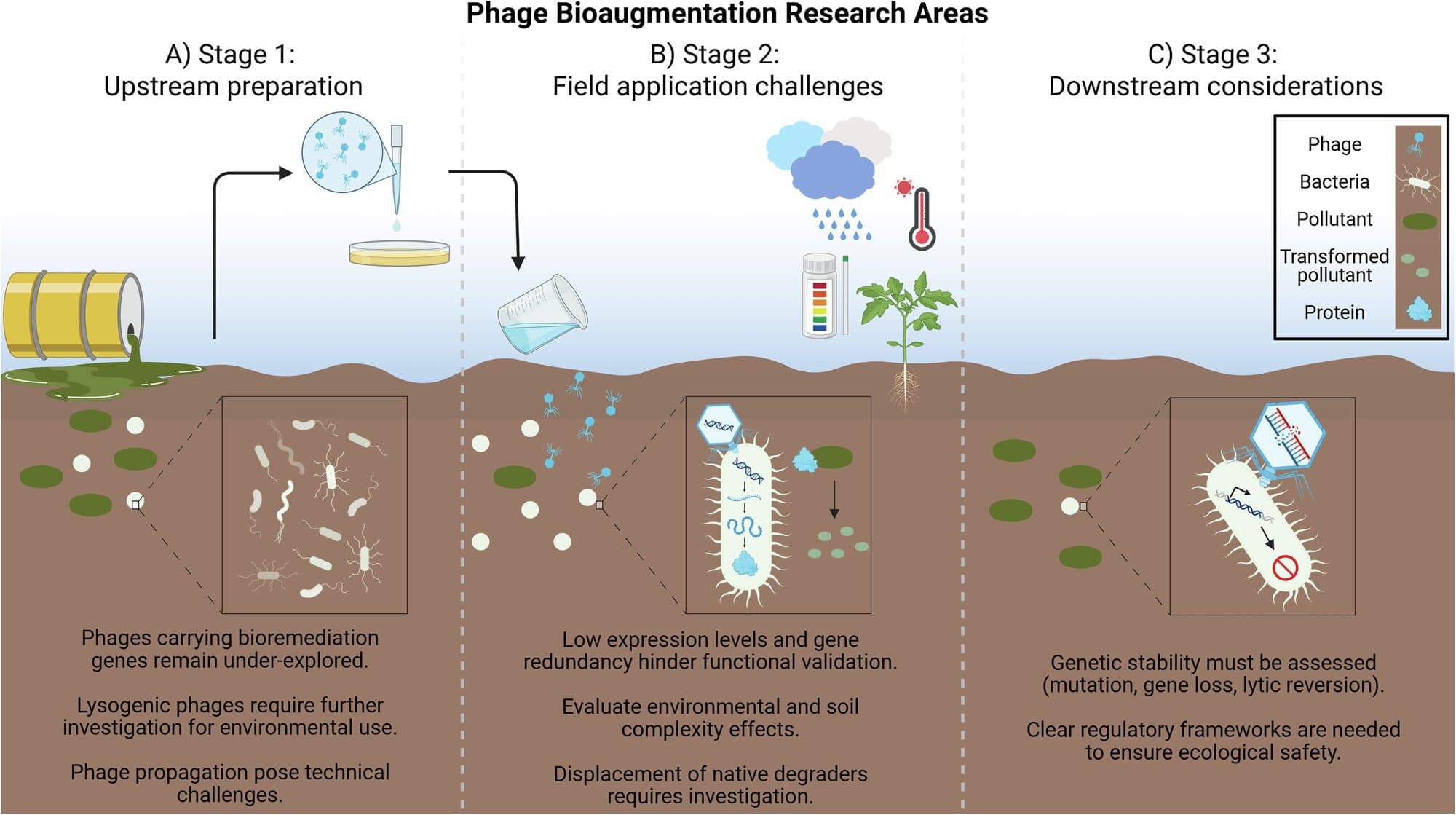
The new approach, called phage bioaugmentation, involves introducing these viruses into polluted areas to enhance the natural ability of bacteria to break down toxins. This method has the potential to be more effective and sustainable than traditional cleanup methods, which often rely on chemicals or physical removal of pollutants. According to the study, the use of lysogenic phages could be a compelling new direction for environmental biotechnology.
The implications of this discovery are significant, particularly in areas where pollution has had devastating effects on ecosystems and human health. If successfully implemented, phage bioaugmentation could provide a cost-effective and environmentally friendly solution for cleaning up polluted sites.
Key Takeaways
- Phage bioaugmentation involves using "friendly" viruses to enhance bacteria's ability to remove pollutants.
- The approach has the potential to be more effective and sustainable than traditional cleanup methods.
- The study suggests that phage bioaugmentation could be a game-changer in the fight against environmental pollution.
- The method has been shown to be effective in removing pollutants from soil, water, and mine waste.
- The study was led by Flinders University and published in Communications Biology.
Why This Matters
This breakthrough has the potential to revolutionize the way we clean up polluted environments, providing a cost-effective and environmentally friendly solution for areas where pollution has had devastating effects on ecosystems and human health.