In a scene in the much-maligned 2005 adaptation of Pride & Prejudice, Mrs Bennet chases after her daughter, who has just turned down a marriage proposal. Dressed in a fussy and billowing white dress, she hikes up her skirts and looks back to the house before rushing off, disturbing a gaggle of geese who start running with her.
The message is clear: Mrs Bennet – a character who, in Jane Austen’s 1813 novel, spends much time alternating between complaining about her nerves and trying to marry off her five daughters – is a silly goose. Flustered. In a flap. Loud. Stressful to be around.
All that’s true. But in a 213-year-old story that hinges on looking past first impressions, Mrs Bennet remains a subject of our own prejudices. It’s time for that to change.
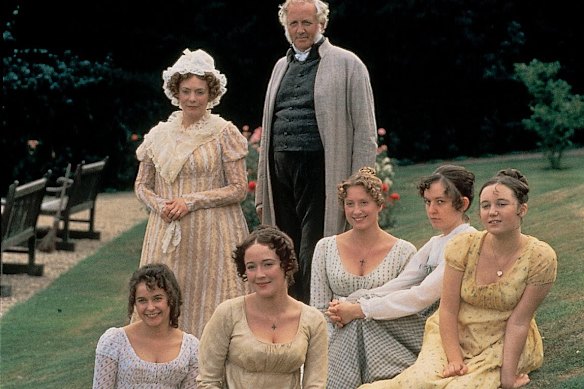
Contrary to an infamous, one-star Amazon review describing the plot as “just a bunch of people going to each other’s houses”, the novel tells the story of Jane and Elizabeth Bennet, the eldest of the sisters, as they navigate love, marriage and relationships in their stuffy English countryside surroundings.
Throughout the story, their mother is a propelling force, ushering her daughters into the paths of suitors and manipulating events to maximise their chances of landing a husband. The novel opens with Mrs Bennet enthusiastically blustering to her uninterested husband that a nearby house has been let to a young, unmarried man with a sizeable income. “You must know that I am thinking of his marrying one of them,” she tells him.
Amidst withering dialogue between the sharp-minded Lizzy and the seemingly proud Mr Darcy – and the budding, gentle romance between Jane and Mr Bingley – Mrs Bennet pops in time and time again to anchor scenes that tie your stomach in knots with secondhand embarrassment.
Here are some truths that must be acknowledged: yes, Mrs Bennet is embarrassing, indiscreet, boastful and single-minded. She would be a difficult person to have in your life. But she’s also the only character who is truly clear-eyed about the society in which she and her family live.
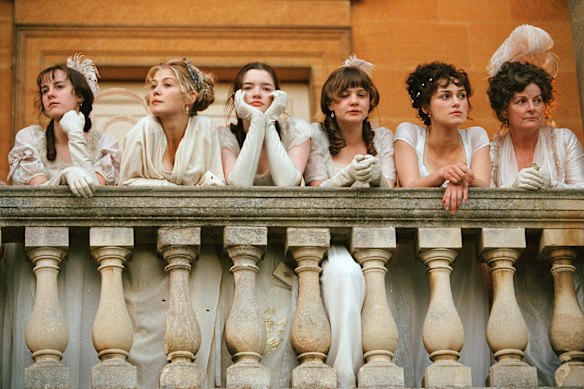
The Bennets are nobility, with an estate that provides £2000 a year. There is an ongoing punch-up on the internet about exactly what that would amount to in modern money. Whatever the sum, it’s a lot – but not billionaire-level wealth. The problem is that the estate must be inherited by a male, and the Bennets have no sons. When Mr Bennet dies, the property (and its attendant annual income) will be inherited by a cousin, leaving his wife and children at the mercy of their family and neighbours.
Unless their daughters marry well.
We feel uncomfortable when Mrs Bennet criticises Mr Darcy for being rude – despite the fact he is rude!
Mrs Bennet – who, it’s worth noting, is probably in her 40s – seems painfully aware of the looming spectre of genteel poverty and is doing everything in her power to prevent it. Mr Bennet, however, couldn’t seem less concerned. It’s not his problem: he’ll be dead.
And yet, Mrs Bennet is the one who comes across poorly, described in the book’s blurb as “garrulous and empty-headed”. She is Cassandra; the prophet who is doomed never to be believed.
Mr Bennet, meanwhile, has settled into our collective consciousness as the calm foil to his wife’s bluster; the kind father with a soft spot for his most intelligent and non-conforming daughter, Lizzy.
But two things can be true at once: Mr Bennet is a loving father (to one of his daughters, at least) but is also the type of husband who, if you ask him to help prepare for visitors, will disappear into his toolshed to rearrange the spanners – while believing he’s granted you a favour by doing so.
Mrs Bennet has been eternally damned for the crime of being “cringe” – but her behaviour stems from love and fear. We look down on her for pressuring Lizzy to marry her cousin – the man poised to inherit their family property – but her only mistake, in this instance, was to focus on the wrong sister.
We feel uncomfortable when she criticises Mr Darcy for being rude – despite the fact he is rude! The first time Lizzy encounters Mr Darcy, she overhears him saying that she is not pretty enough to dance with. In her own, clumsy way, her mother was standing up for her.
And where’s Mr Bennet in all of this? At home, reading a book, relaxed, unbothered and enjoying his £2000 a year.
If you consider Mrs Bennet’s motivations and actions, as opposed to her off-putting demeanour, she emerges as one of the most hard-done-by and genuinely pragmatic characters in Austen’s story. And she deserves to be lauded for her sense and sensibility.
The Booklist is a weekly newsletter for book lovers from Jason Steger. Get it delivered every Friday.