Quick Brief
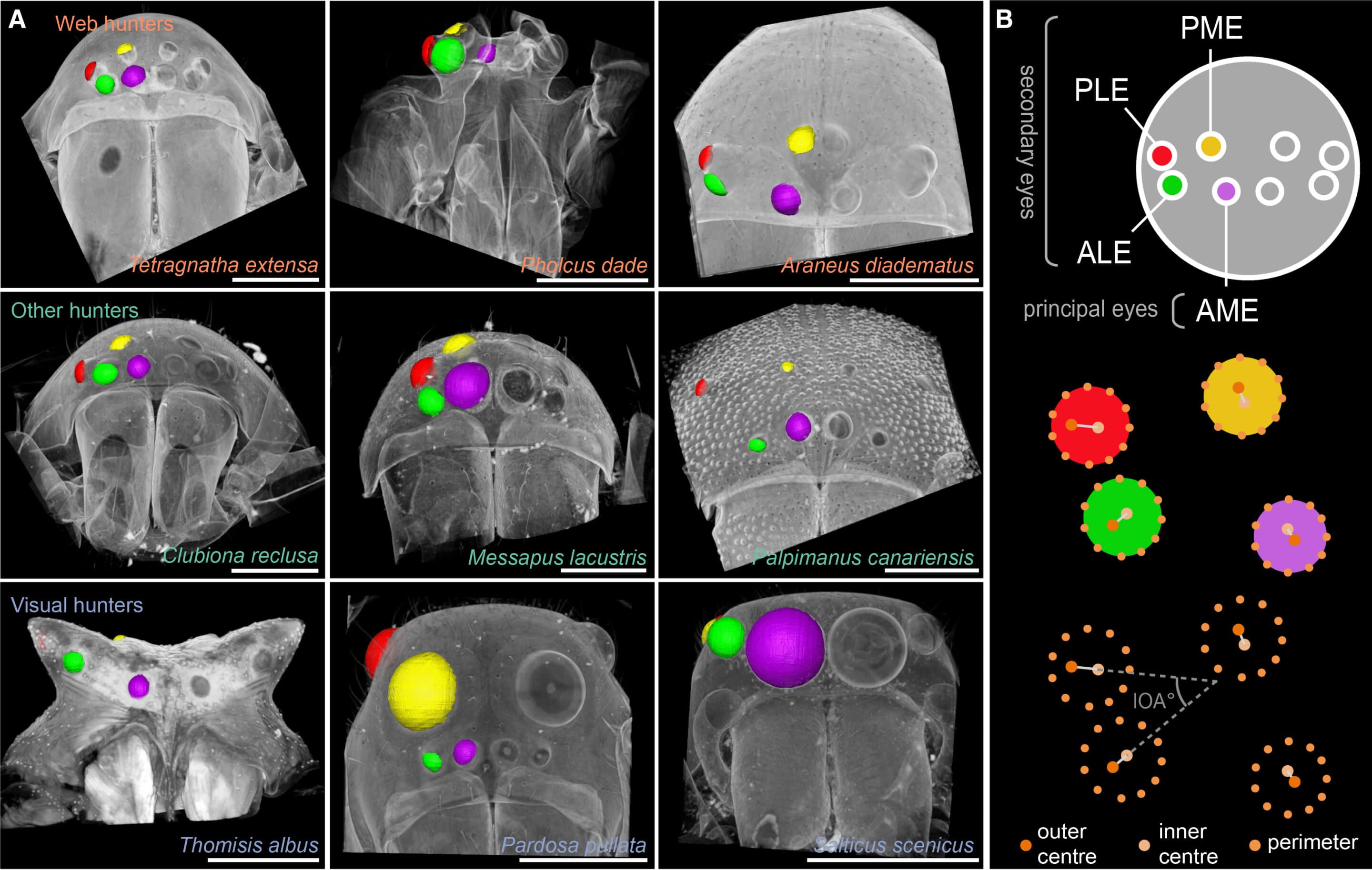
Scientists have made an interesting discovery about the behavior of spiders. Researchers studied the eye arrangements of various spider species, which can have up to eight eyes. The findings suggest that the way spiders arrange their eyes is closely linked to their hunting strategies. This discovery challenges the existing understanding of how eye placement relates to lifestyle in animals with two eyes.
Spiders with different eye arrangements have distinct hunting behaviors. For instance, hunting spiders like the wolf spider often have forward-facing eyes, which help them judge distance and track prey. In contrast, web-building spiders like the garden spider have eyes positioned on the sides of their head, providing a wider view of their surroundings.
The study's findings have implications for our understanding of animal behavior and ecology. By examining spider eye arrangements, researchers can gain insights into the evolution of hunting strategies in these fascinating creatures.
Why This Matters
This research matters to anyone interested in animal behavior, ecology, and evolution. Understanding how animals adapt to their environments and develop unique strategies for survival can provide valuable insights into the natural world. The discovery of a link between spider eye arrangements and hunting strategies can also inform conservation efforts and our appreciation of these fascinating creatures.
Background
Animals with two eyes often have eye placement linked to their lifestyle. Predators like lions have forward-facing eyes that help them judge distance, while prey animals like deer have eyes positioned on the sides of their head, providing a wider view of their surroundings. However, most of what we know about eye placement comes from animals with two eyes, leaving a gap in our understanding of animals with multiple eyes, like spiders.
Spiders have evolved remarkable diversity in their eye arrangements, with some species having up to eight eyes. This diversity has long been a subject of interest for scientists, who want to understand how these patterns relate to hunting strategy. By studying spider eye arrangements, researchers can gain insights into the evolution of hunting strategies in these fascinating creatures.
Key Details
- The study found a link between spider eye arrangements and hunting strategies.
- Spiders with different eye arrangements have distinct hunting behaviors.
- Hunting spiders like the wolf spider often have forward-facing eyes, which help them judge distance and track prey.
- Web-building spiders like the garden spider have eyes positioned on the sides of their head, providing a wider view of their surroundings.
- The study's findings challenge the existing understanding of how eye placement relates to lifestyle in animals with two eyes.
- The research has implications for our understanding of animal behavior and ecology.
Possible Impact
The discovery of a link between spider eye arrangements and hunting strategies can have a significant impact on our understanding of animal behavior and ecology. By examining spider eye arrangements, researchers can gain insights into the evolution of hunting strategies in these fascinating creatures. This knowledge can inform conservation efforts and our appreciation of these fascinating creatures.
The study's findings may also have implications for the development of robotics and artificial intelligence. By understanding how spiders adapt to their environments and develop unique strategies for survival, researchers can design more effective robots and AI systems that can navigate complex environments.
What To Watch Next
As researchers continue to study spider eye arrangements and hunting strategies, we can expect to see more discoveries about the fascinating world of spiders. Future studies may examine the genetic basis of spider eye arrangements, the evolution of spider vision, and the development of more effective hunting strategies in different spider species.
Source and Transparency
Source: Phys.org This BRIEFXIFY brief is AI-assisted and based on publicly available news source information. It is written for quick understanding and does not replace the original report. Read the original source for full context.