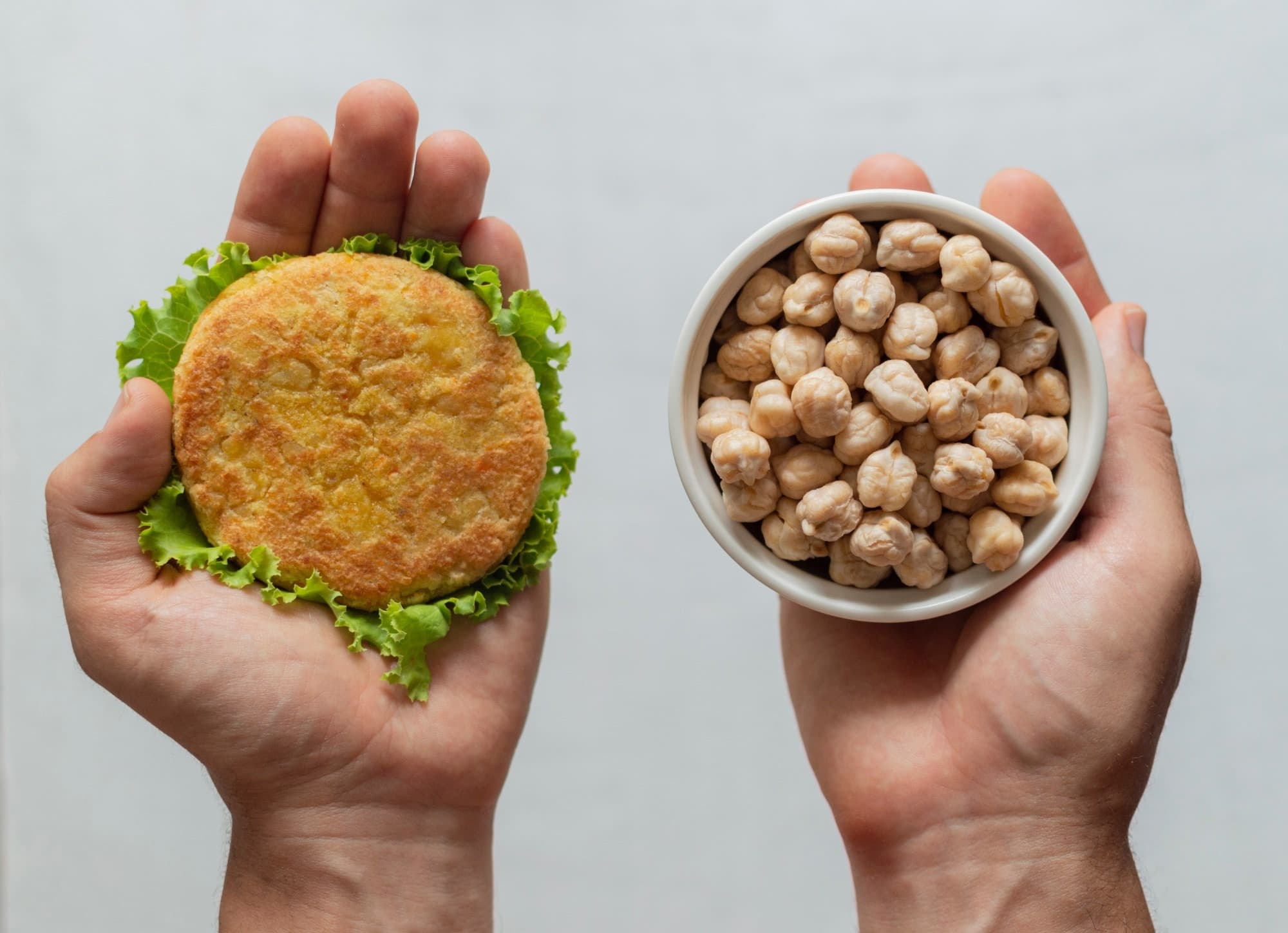
As consumers trade meat, fish, and dairy for plant-forward substitutes, new Dutch modeling shows why smart swaps, fortification, and tailored guidance may be essential to keep plant-based diets nutritionally complete.
Study: Shifting to Plant-Based Protein Diets Alters Nutrient Adequacy Across Age Groups: A Dutch Dietary Modeling Study. Image Credit: mariya_evlakhova / Shutterstock
In a recent study published in the journal Nutrients, a group of researchers evaluated how replacing commonly consumed animal-based foods with plant-based alternatives affects protein, essential amino acid (EAA), vitamin, and mineral intake across different age groups in the Dutch population.
Can switching to a more plant-based diet improve health without compromising essential nutrition? This question has gained importance across all ages, as plant-based eating offers health, environmental, and ethical benefits.
Diets high in fruits, vegetables, legumes, nuts, and whole grains lower the risk of developing chronic illness and also help reduce greenhouse gas emissions and resource consumption. On the other hand, reducing or replacing major animal-based foods may lower protein, vitamin, and mineral intake, particularly in children and older adults who have greater nutritional needs.
About the study
The researchers conducted a dietary simulation study using data from the Dutch National Food Consumption Survey (DNFCS) 2019-2021, a population-based cross-sectional survey coordinated by the National Institute for Public Health and the Environment (RIVM).
The study included 3,570 people aged 1-79 across different age groups, sexes, backgrounds, and regions. Dietary intake information was collected using two non-consecutive 24-hour dietary recalls, completed within 2 to 6 weeks, through the GloboDiet dietary assessment program. Nutrient intake was calculated using the Dutch food composition database.
The investigators modeled two dietary replacement scenarios. The first represented a nutritionally conscious transition in which commonly consumed animal-based foods were replaced with more nutritionally favorable plant-based alternatives.
The second represented a less nutritionally conscious transition using widely available plant-based substitutes with comparatively lower nutritional quality.
Major animal-based protein sources, including meat, poultry, fish, and dairy products, were replaced gram for gram with replacement products commonly available in the Dutch market, while mixed dishes and foods containing small amounts of animal-derived ingredients remained unchanged. As a result, the scenarios represented a partial shift toward more plant-based eating, rather than a fully vegan or vegetarian diet.
Related Stories
- Trial finds prunes do not outperform calcium and vitamin D for male bone density
- Blueberries may boost children's memory and mood
- Plant-based diets offer heart benefits but may require supplements
The researchers then compared total protein, EAA, vitamin, and mineral intake in the original and simulated diets with recommendations established by the World Health Organization (WHO), the European Food Safety Authority (EFSA), the European Society for Clinical Nutrition and Metabolism (ESPEN), and other recognized authorities.
Study results
The simulation included dietary data from 3,570 participants across multiple age groups. In the original dietary data, average protein intake exceeded the WHO recommendations for nearly all age groups. However, adults aged 71-79 years did not achieve the higher protein intake recommended by the ESPEN.
After replacing selected animal-based foods with plant-based alternatives, total protein intake declined in both dietary scenarios, with greater reductions in the less nutritionally conscious scenario.
Among females, protein intake fell below recommended levels in all age groups older than 18 years in the nutritionally conscious scenario and in those aged 14-18 in the less conscious scenario.
Among males, intake fell below recommendations from 31-50 years onward in the nutritionally conscious scenario and from 19-30 years onward in the less conscious scenario. Although there was a marked increase in plant-based protein intake, particularly from legumes, it did not fully offset the reduction in animal-based protein intake.
The intake of EAAs also declined after dietary substitution. Nevertheless, average intakes of most EAAs remained above recommended levels across age groups. An important exception was the combined sulfur amino acid measure (methionine plus cysteine), which fell below recommended levels in older adults under both dietary scenarios.
Lysine remained close to recommended levels but did not fall below them. However, the authors noted that comparing methionine alone with a combined methionine-plus-cysteine requirement may have overestimated inadequacy for this measure.
These data indicate that older adults may struggle to maintain protein intake during their transition to a more plant-based diet.
Intakes of vitamins A, B1 (thiamine), B2 (riboflavin), B3 (niacin), B6, and B12 generally declined after age 9, leaving many people below recommended intake levels. However, folate intake increased slightly after dietary substitution, and males again met their recommended daily intake.
Folate intake remained below recommended levels among females. The original intake of vitamin D was already below recommended daily levels across all age groups, and following the substitution, it remained inadequate. On the other hand, vitamin E intake actually increased because the average amount of vitamin E in plant-based foods is greater than that in animal-based foods.
The modeled substitutions also affected mineral intake. Calcium, which was already low in several age groups prior to the change, decreased further due to the dietary transition, resulting in values below the recommended levels for all groups. Iron intake marginally increased due to greater non-heme iron intake, but it remained insufficient for children and reproductive-aged women.
Heme iron decreased, while non-heme iron slightly increased. Iodine, selenium, and zinc decreased in both cases; after substitution, zinc was inadequate for all age groups. Copper was found to have increased; potassium, manganese, and phosphorus remained mostly unchanged overall.
Conclusion
The researchers concluded that shifting toward more plant-based diets may reduce the intake of protein and several essential nutrients, particularly when substitutions are not nutritionally planned. Older adults and adolescents appeared to be the groups most vulnerable to nutritional inadequacies. Although switching to a more plant-based diet can provide health and environmental benefits, careful dietary planning is needed to support adequate intake levels of EAAs, vitamins, and minerals.
Findings also indicated the potential value of nutrient-fortified foods, dietary guidance tailored to different age groups, and continued research evaluating protein quality, nutrient bioavailability, realistic consumption patterns, biomarker-based assessment of nutritional status, and the long-term effects of transitioning toward more plant-based dietary patterns.
Further research is needed to determine how dietary changes affect nutrient requirements across age groups.
Journal reference:
- de Vries, J., Singh-Povel, C. M., Oudhuis, L. A. A. C. M., de Vos, P., & Akkerman, R. (2026). Shifting to plant-based protein diets alters nutrient adequacy across age groups: A Dutch dietary modeling study. Nutrients. 18(13). DOI: 10.3390/nu18132127. https://www.mdpi.com/2072-6643/18/13/2127