Quick Brief
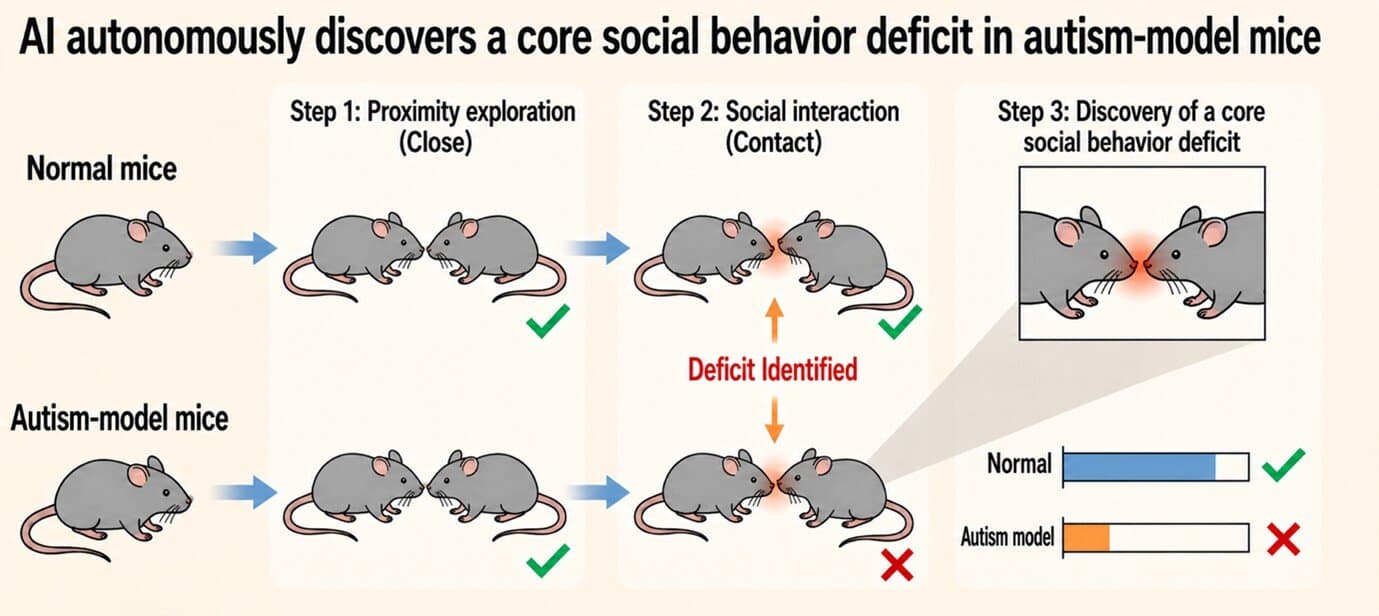
Researchers at KAIST have developed an artificial intelligence model that can interpret animal behavior like language. This AI model learns behavioral data in a manner similar to natural language processing and has been used to identify social behavioral deficits in an autism mouse model. The model's ability to read and interpret animal behavior could open new avenues for interpretable neuroscience.
The AI model was trained on behavioral data from mice and was able to learn patterns and relationships in the data. It then used this knowledge to identify deficits in social behavior in the autism mouse model. This is a significant breakthrough in the field of neuroscience, as it could potentially lead to new treatments or interventions for autism and other neurological disorders.
The researchers at KAIST are excited about the potential of this technology and believe it could be used to study a wide range of neurological conditions. They are also exploring the possibility of using this technology to develop new treatments for autism and other disorders.
Why This Matters
This breakthrough in AI technology has significant implications for the field of neuroscience and could potentially lead to new treatments or interventions for autism and other neurological disorders. The ability to read and interpret animal behavior like language could also be used to study a wide range of neurological conditions, leading to a deeper understanding of the underlying causes of these disorders.
Background
Autism is a complex neurological disorder that affects millions of people worldwide. It is characterized by deficits in social behavior, communication, and repetitive behaviors. Current treatments for autism focus on addressing these symptoms, but there is still a great deal that is not understood about the underlying causes of the disorder.
Researchers have long been interested in developing new treatments for autism that address the underlying causes of the disorder, rather than just its symptoms. However, this has proven to be a challenging task, as the underlying causes of autism are still not fully understood.
Key Details
- The AI model was trained on behavioral data from mice and was able to learn patterns and relationships in the data.
- The AI model was used to identify deficits in social behavior in an autism mouse model.
- The AI model learns behavioral data in a manner similar to natural language processing.
- The researchers at KAIST are exploring the possibility of using this technology to develop new treatments for autism and other disorders.
- The AI model's ability to read and interpret animal behavior could be used to study a wide range of neurological conditions.
- The researchers at KAIST are excited about the potential of this technology and believe it could be used to make significant breakthroughs in the field of neuroscience.
Possible Impact
The impact of this breakthrough could be significant, particularly for individuals with autism and their families. The ability to develop new treatments or interventions that address the underlying causes of autism could lead to improved outcomes for individuals with the disorder.
The use of AI technology to read and interpret animal behavior could also be used to study a wide range of neurological conditions, leading to a deeper understanding of the underlying causes of these disorders. This could lead to the development of new treatments and interventions for a wide range of neurological disorders.
What To Watch Next
Readers should monitor the development of this technology and its potential applications in the field of neuroscience. The researchers at KAIST are likely to publish further studies on the use of this technology to develop new treatments for autism and other disorders.
Additionally, readers should keep an eye on the potential applications of this technology in other fields, such as psychology and education. The ability to read and interpret animal behavior could be used to develop new treatments for a wide range of conditions, and could also be used to improve our understanding of animal behavior and cognition.
Source and Transparency
Source: Medical Xpress This BRIEFXIFY brief is AI-assisted and based on publicly available news source information. It is written for quick understanding and does not replace the original report. Read the original source for full context.