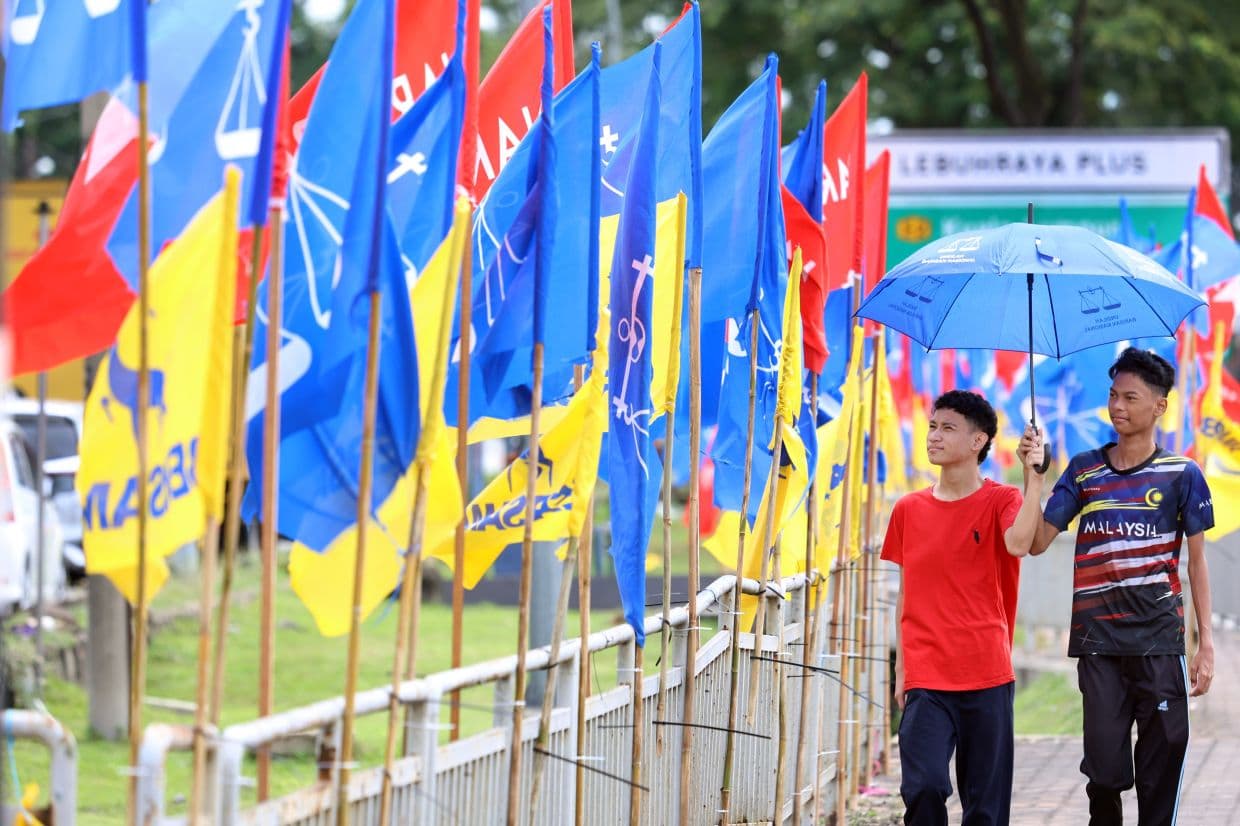
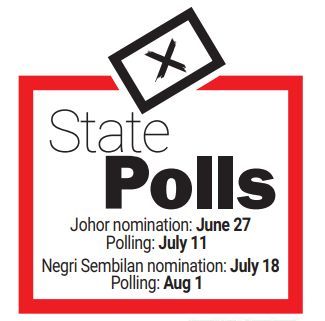
JOHOR BARU: Artificial intelligence (AI) is being heavily used in this state polls not just to come up with election posters but also memes.
“AI has brought a lot of advantages to the parties. It can help reduce costs and save time while also allowing them to come up with content backed by a lot of data,” said Universiti Teknologi Malaysia political analyst Assoc Prof Dr Mazlan Ali.
But he pointed out that the many AI-generated misinformation posts spreading around had caused voters to be wary of what they see online.
Although having a cautious attitude is good, he said that this could mean it would be more difficult for them to trust information that is actually true.
He noted that podcasts seem to be trending now among the public, especially young people.
Political parties, he said, may have to go back to traditional approaches such as walkabouts and house-to-house visits to stand out in this election.
Malaysia Cyber Consumer Association president Siraj Jalil said that political campaigners should be ethical in their use of AI.
He said there had been instances of AI-generated content featuring satire in the form of videos or photos based on the image of known figures without consent.
“We are not against the use of any technology, but such use must be accompanied by strong ethics.
“All political parties, including parties in the government, and their communication machinery must be mindful and responsible in using such content.”
Siraj urged the Digital Ministry, particularly its National AI Office (NAIO), to come up with guidelines on the use of AI as soon as possible.
“The biggest problem now is that there are no proper guidelines for the use of AI, so people do not know what the dos and don’ts are for AI-generated content,” he said.
Retiree Kamarudin Mat Ali, 57, from Puteri Wangsa, has been getting much of his information on the Johor polls this time from online and social media, which he said can be overwhelming.
“In my area, there are five candidates, including an Independent. There seems to be a lot of things being shared online or via our chat groups.
“I am always cautious when I get such posts and always tell my friends to only share once the information is verified.
“These days, AI can be very convincing and even mimic a candidate saying untrue things,” he said, adding that so far, however, he has only come across memes and posters online.
Kamarudin said he would much prefer to attend talks and ceramah, especially over the weekend, to evaluate the candidates.
MIC vice-president Datuk M. Asojan acknowledged that AI is being used heavily in this election and cautioned voters not to believe everything they see or read online.
“We have to be careful as people can twist the narrative to suit them or their agenda.”
He cited the example of an online poster and meme which used the scare tactic that “a vote for Barisan Nasional is a vote for PAS to enter Johor”.
Such scare tactics are intended to get the Chinese and Indian community agitated, he said.
Johor PKR vice-chairman Jimmy Puah said there are many benefits in using AI during campaigns, such as reducing time and money.
“But if AI is being used to spread misinformation and fake news during an election or any other time, then this becomes a concern because AI is getting better and people will find it difficult to tell what is real, especially with deepfake videos,” he said.
Parti Bersama Malaysia leader Datuk Seri Rafizi Ramli said his party uses AI platforms mainly to assist with campaign planning.
“For example, if you want to plot the routes for the truck, instead of calculating it yourself, you let AI do it.
“So, a lot of the supporting work is facilitated by AI.
“That’s why, with a central campaign team of about 10 people, we can manage the whole campaign.”
Rafizi, however, said AI’s role in election campaigns has been overhyped, noting that the technology is mainly used to assist with planning rather than run an entire campaign.