As carbon dioxide (CO2) emissions continue to climb, interest in geoengineering is growing as governments, researchers, and environmental advocates search for ways to limit the worst effects of climate change. These large scale climate interventions could influence rainfall, agriculture, and ecosystems around the world, making their potential benefits and risks equally significant.
A new study from climate scientists at the University of California, Santa Barbara suggests that not all geoengineering strategies have the same consequences. While one proposed method could severely disrupt one of Earth's most important climate cycles, another appears to have little impact. The findings, published in Earth's Future, highlight why researchers say every proposal must be carefully evaluated before it is ever put into practice.
"We need to be careful about implementing geoengineering proposals before we fully understand what's going to happen," said first author Chen Xing, a doctoral student at UCSB's Bren School of Environmental Science & Management.
Why El Niño Matters
Xing and fellow Bren graduate student Cali Pfleger began the project to better understand how geoengineering might affect marine ecosystems. That question quickly led them to examine the El Niño Southern Oscillation (ENSO), a major driver of ocean and atmospheric conditions.
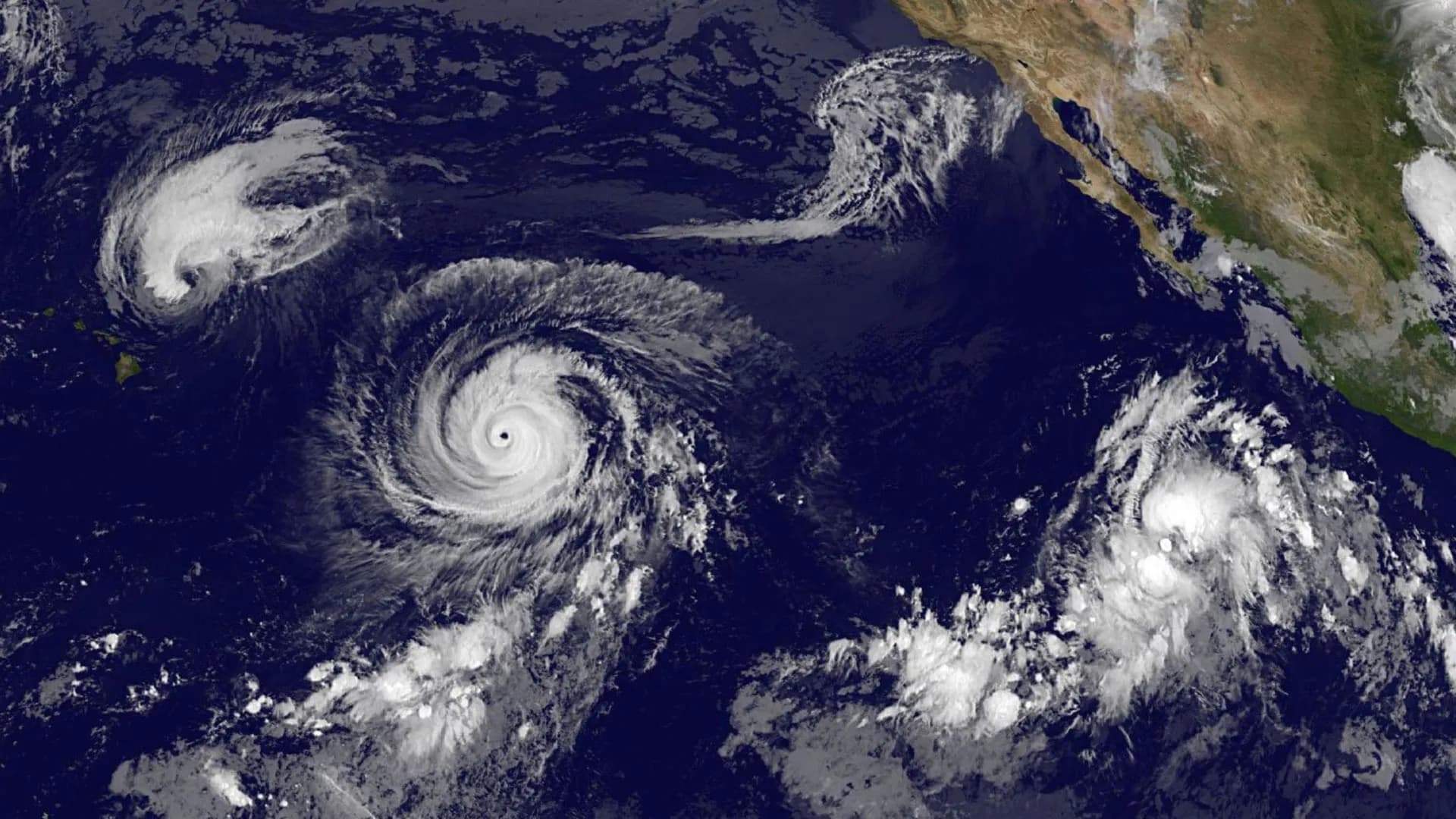
ENSO is a naturally occurring climate cycle that repeats every 2 to 7 years. It shifts warm ocean water across the tropical Pacific, influencing weather around the globe. During El Niño events, warmer waters move toward the west coasts of the Americas, often bringing wetter winters to California. During La Niña, warmer waters remain farther west, strengthening monsoon rains across parts of South and Southeast Asia.
Comparing Two Climate Cooling Strategies
The researchers studied two geoengineering approaches that aim to cool the planet by reflecting more sunlight back into space. Both rely on releasing tiny particles into the atmosphere, but they differ in the materials used and the altitude where they are released.
One method, known as marine cloud brightening (MCB), sprays sea salt particles less than 2 kilometers above the ocean surface. These particles create clouds with smaller, more numerous droplets, making the clouds brighter and more reflective.
The second method, called stratospheric aerosol injection (SAI), releases sulfate particles much higher in the atmosphere. Because these particles spread more evenly around the globe, they block a portion of incoming sunlight over a much larger area.
A Surprising Impact on El Niño
Marine cloud brightening has often been proposed for the eastern sides of ocean basins because of its strong cooling potential. However, the southeastern Pacific also plays an important role in maintaining ENSO.
The simulations revealed an unexpected result. "Deploying MCB in the subtropical eastern Pacific dramatically reduces ENSO amplitude by approximately 61%," the authors write.
"It's hard to get ENSO to change by that much that quickly," said Associate Professor Samantha Stevenson, who co-authored the study, and is Xing's and Pfleger's advisor.
The reason lies in how marine cloud brightening changes local weather. Brighter clouds cool the ocean surface below while also reducing rainfall because the smaller cloud droplets are less likely to combine into raindrops. As cooler, drier air spreads into the central Pacific, evaporation decreases, atmospheric circulation weakens, and winds along the equator strengthen. Those changes increase the upwelling of colder water and further cool the ocean surface.
Together, these effects dramatically weaken ENSO.
The researchers expected marine cloud brightening to influence the climate, but not to this extent.
We thought the proposals could have impacts, "but we didn't expect two-thirds of ENSO's variance to disappear," Xing said. The takeaway, he added, is straightforward: "Don't do MCB over the eastern Pacific Ocean because it might cause super strong chain reactions from ENSO's disappearance."
Why Stratospheric Aerosols Behaved Differently
The second geoengineering strategy produced a very different outcome. Stratospheric aerosol injection had almost no measurable effect on ENSO.
The researchers believe the difference comes down to where the particles are released. Marine cloud brightening concentrates particles close to Earth's surface in one specific region. By comparison, sulfate particles injected into the stratosphere spread much more widely, creating a more uniform cooling effect that is less disruptive to the tropical Pacific.
Even so, Stevenson emphasized that the findings should not be interpreted as a blanket rejection of marine cloud brightening.
"We're not saying that all MCB is going to kill ENSO. We're just saying that this happens if you do it in this specific region," she said.
She noted that marine cloud brightening could potentially be used in other locations, although achieving the same amount of global cooling would likely require a much larger effort.
Climate Risks Go Beyond Temperature
The researchers also point out that choosing not to intervene carries risks of its own. Unchecked climate change is expected to disrupt ecosystems, natural climate cycles, and human societies. Scientists still do not know exactly how ENSO itself will respond to continued global warming, adding another layer of uncertainty.
"There's nothing that compares to the speed with which ENSO would change in these MCB experiments," Stevenson said. "It just does not naturally drop 60% in 10 years, even under climate change."
Reflecting more sunlight away from Earth could also reduce photosynthesis. That would lower the productivity of crops, forests, and marine algae. Because algae form the base of the ocean food web and produce roughly 70% of the oxygen in Earth's atmosphere, understanding these impacts is especially important.
The research team plans to investigate how different geoengineering strategies could affect marine ecosystems in future studies.
Understanding the Tradeoffs
The study illustrates that geoengineering cannot be judged solely by how much it cools the planet. Different approaches may achieve similar reductions in global temperature while producing dramatically different regional climate effects.
"Two interventions can get to the same warming target globally and have extremely different regional climate impacts," Stevenson said. "The most important question is, 'Are we thinking of all of the potential consequences?'"